Sleep Sync

Project Details
Project Overview
Role
UX Designer

The Smart Pillow project was developed as part of Somatic Design Project 1 (SDP1), focusing on how the human body shapes interactions with technology. This project explores multi-sensory engagement through temperature regulation, haptic feedback, and auditory stimuli, enhancing the sleep experience.This is a smart, temperature-regulating pillow designed to enhance sleep quality by integrating haptic feedback, biometric tracking, and IoT connectivity. It features temperature control, a gentle vibrating alarm, and smart home integration, allowing users to personalize their sleep environment. By connecting to wearable devices, smart alarms, and home automation systems, the pillow adapts to real-time user data, creating a seamless and responsive sleep experience. This was all done in low to medium-fidelity prototypes.

This project prioritizes hands-on prototyping over research, focusing on developing a functional model rather than conducting extensive studies.

Client
Maker Lab
Type
UI
Prototyping

The Challenge

This was done for a school project and so we had a limited time and budget.

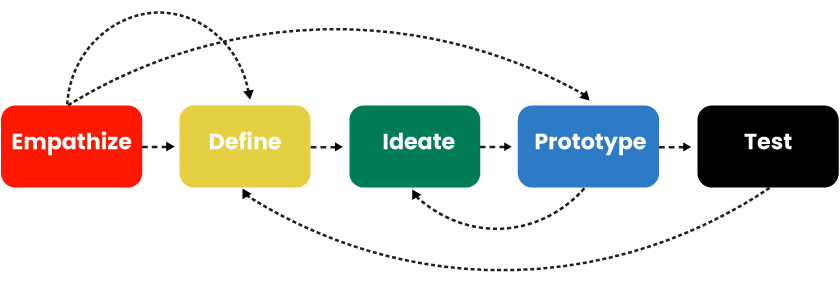
The Design Thinking Process
Aim & Objectives

Aims:
  • To design a smart, temperature-regulating pillow that enhances sleep quality by integrating haptic feedback, biometric tracking, and internet of things connectivity.
  • To explore how somatic design principles can improve users' interaction with sleep technology.
  • To create a conceptual IoT-enabled prototype that demonstrates the potential of smart home integration for sleep optimization.
Objectives:
  1. Enhance Sleep Comfort – Develop a pillow that adjusts its temperature based on user preferences and external conditions.
  2. Integrate internet of things Connectivity – Enable communication with smart home devices, wearable technology, and smart alarms for a personalized sleep experience.
  3. Utilize Haptic Feedback – Implement a vibrating alarm system as an alternative to traditional sound-based alarms for a gentler wake-up experience.
  4. Prototype Development – Construct a medium-fidelity prototype using Arduino components, temperature-modulating elements, and haptic actuators.
  5. User-Centered Design – Incorporate user feedback to refine the concept, ensuring the pillow is intuitive, effective, and feasible.
  6. Investigate Production Feasibility – Explore potential materials, manufacturing techniques, and cost-effective solutions for real-world production.
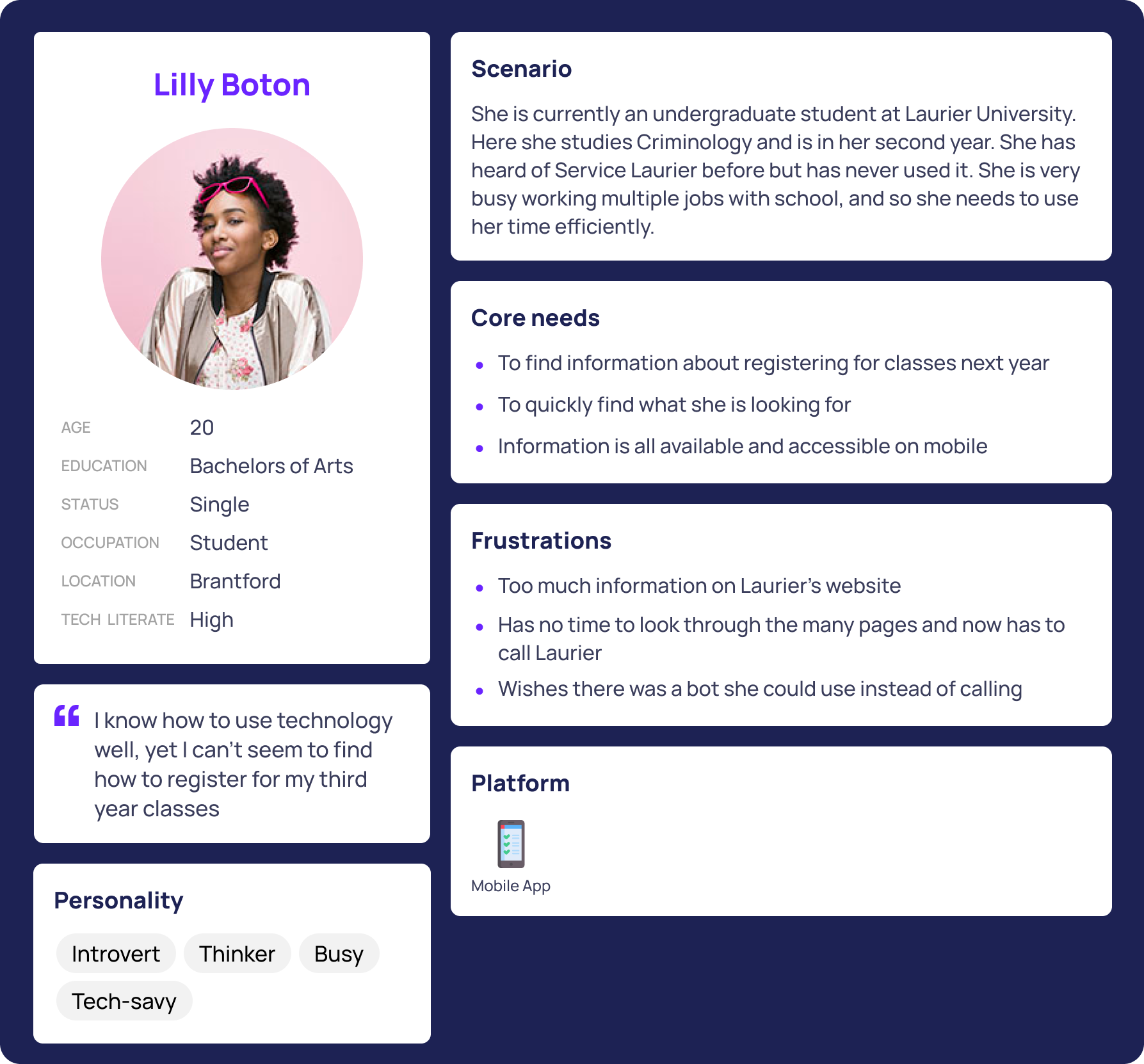
User persona profile of Lilly Boton, a 20-year-old female student from Brantford studying Criminology at Laurier University, showing her core needs, frustrations, personality traits, and platform preference.
User persona profile for Michael Bluebell, a 24-year-old student from Brantford with low tech literacy, featuring his photo, scenario, core needs, frustrations, platform, and personality traits.
User persona for Sara Patel, 30-year-old student from Waterloo with a Bachelors of Arts, single, medium tech literacy, recently switching major from Criminology to Psychology, seeking clear guidance on program change process with core needs including labeled section, step-by-step guide, and easy access to enrollment services, frustrated by difficulty finding transfer info and course credit uncertainties, using website and mobile app platforms, personality traits include determined, practical, adaptable, and anxious.
UX persona card for Christian Smith, 19-year-old bachelor of arts student from Brantford, medium tech literacy, seeking financial help and scholarship info at Laurier, prefers mobile app use.
Low-fidelity Mock-up
High-fidelity prototype 1
High-fidelity prototype 2
Here is what our prototype for the app looked like:

Conclusion

Reflecting on this project, I gained valuable insights into the complexities of designing for the human body and the importance of balancing innovation with practicality. Developing a prototype rather than just theorizing solutions pushed me to think critically about real-world constraints like material sourcing, cost-effectiveness, and manufacturability. While there are areas for improvement—such as refining the cost and optimizing the integration of IoT features—this project has reinforced my understanding of how digital and physical interfaces can enhance user experiences. It also emphasized the role of iterative design in refining ideas into tangible, impactful solutions.

For more information, here is our prototyping plan:

Download Deliverable
Let’s work . Available for hire.